🚀 Getting Started
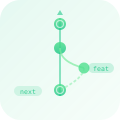
This guide covers the conventions shared across the Z-Shell organization — commit format, pull request workflow, and review expectations. Where a convention differs per repository, such as the branch model below, the guide says so and links the authoritative source. Repo-specific additions (zi, wiki, etc.) are documented in their own sub-pages.
Prerequisites
Fork and Clone
# 1. Fork the repo on GitHub, then clone your fork
git clone https://github.com/<your-username>/<repo>.git
cd <repo>

# 2. Add the upstream remote
git remote add upstream https://github.com/z-shell/<repo>.git
Branch Model
The organization default is trunk-based development on main. Branch from the
current main and open your pull request into main.
Zi uses protected main with full stable qualification before every merge.
Its former next integration model is retired under
ADR 0039.
An old next reference does not change the contribution target.
Opening a pull request against the wrong base is a common first-time
contribution mistake. Read the owning repository's contribution guidance and
AGENTS.md, and use main.
The authoritative per-repository table lives in ADR 0019: Trunk-on-Main Default. At the time of writing:
| Integration branch | Repositories |
|---|---|
trunk on main | all repositories, including zi |
Consult the ADR rather than this table if the two ever disagree; the ADR is the source of truth, and changing a repository's model requires amending it.
Branch naming
Use the issue-linked organization names:
feature-<issue>  planned features, documentation, refactors, and maintenance
bug-<issue>      non-critical bug fixes
hotfix-<issue>   urgent fixes branched from the stable or deployment ref
Rules:
- Branch from current
mainand open the pull request intomain. - Keep the branch short-lived and linked to its owning issue.
- For Zi, every merge must pass full stable qualification. Hotfixes use the
same protected
mainpath.
Commit Message Format
All commits must follow Conventional Commits:
type(scope): short description

Optional body — explain what and why, not how.
Wrap at 72 characters.

Optional footer(s):
Fixes #123
BREAKING CHANGE: description of what breaks
Allowed Types
| Type | Purpose |
|---|---|
feat | New feature |
fix | Bug fix |
perf | Performance improvement |
refactor | Code restructure, no behavior change |
docs | Documentation only |
test | Test additions or corrections |
ci | CI/CD pipeline changes |
chore | Routine maintenance |
revert | Revert a previous commit |
Rules
- Subject line: imperative mood, ≤ 72 characters, no trailing period
- Breaking changes: use
!suffix (feat!:) and add aBREAKING CHANGE:footer Co-authored-bytrailers must credit a real human — including yourself as the pull request author. Never credit a bot, AI agent, or automation as a co-author.z-shell/.githubandz-shell/zienforce this in CI; the other repositories rely on the author until their own check is live
To tidy commits before opening a PR:
git rebase -i $(git merge-base HEAD main)
What Not to Add
AGENTS.md,CLAUDE.md,GEMINI.md,.cursorrules, or any AI-specific config files- Secrets, credentials, or API tokens of any kind
- Binary files unrelated to the project
Pull Request Checklist
Before opening a PR:
- Branched from current
main - Pull request targets
main - Commits follow Conventional Commits
- No secrets or AI config files added
- Relevant docs or tests updated
- All CI checks pass
Keeping Your Fork Up to Date
git fetch upstream
git rebase upstream/main
Discussion First
Before starting significant work, open an issue to discuss the change. This avoids duplicated effort and ensures alignment with the project roadmap.